Tira-Tira pel Tirador · Infrastructure, Urban, Sustainability · Spain
Park transformation in Mallorca
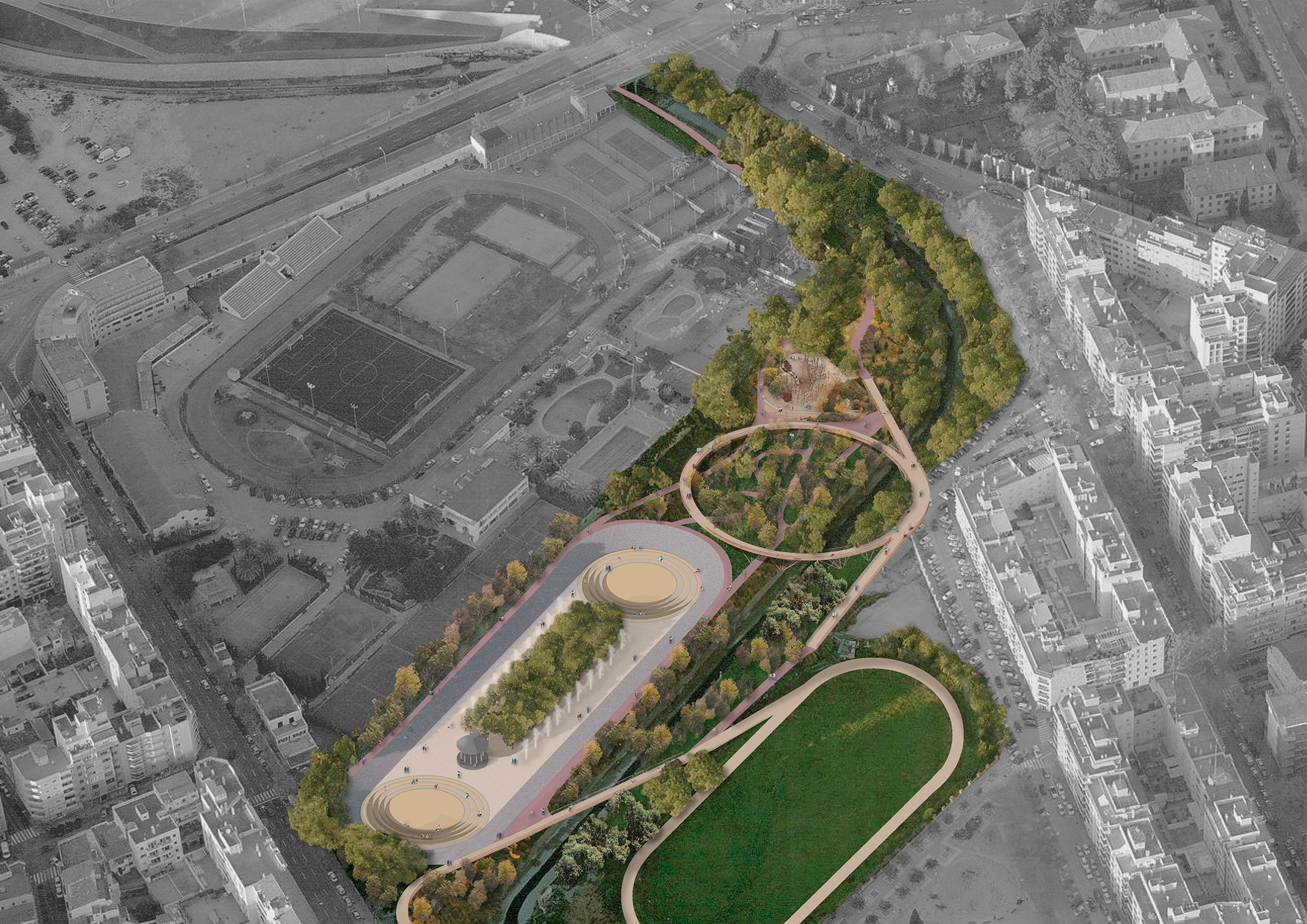
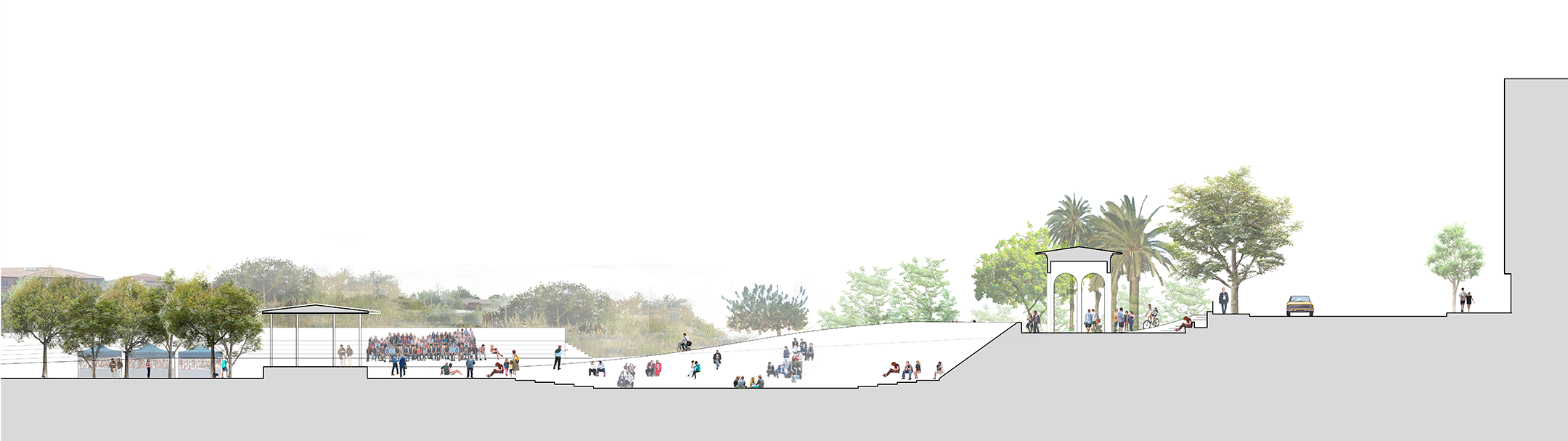
The project “Tira-Tira pel Tirador” proposes the transformation of the former Tirador Velodrome and its surroundings in Palma into an urban park of high ecological, heritage, and social value.
It is a strategic intervention that connects multiple territorial and urban scales, integrating the city with its landscape and memory. Through a series of architectural, landscape, and environmental actions, the project aims to establish a major green and blue corridor linking the sea with the Serra de Tramuntana, forming a continuous ecological infrastructure around the Sa Riera stream.
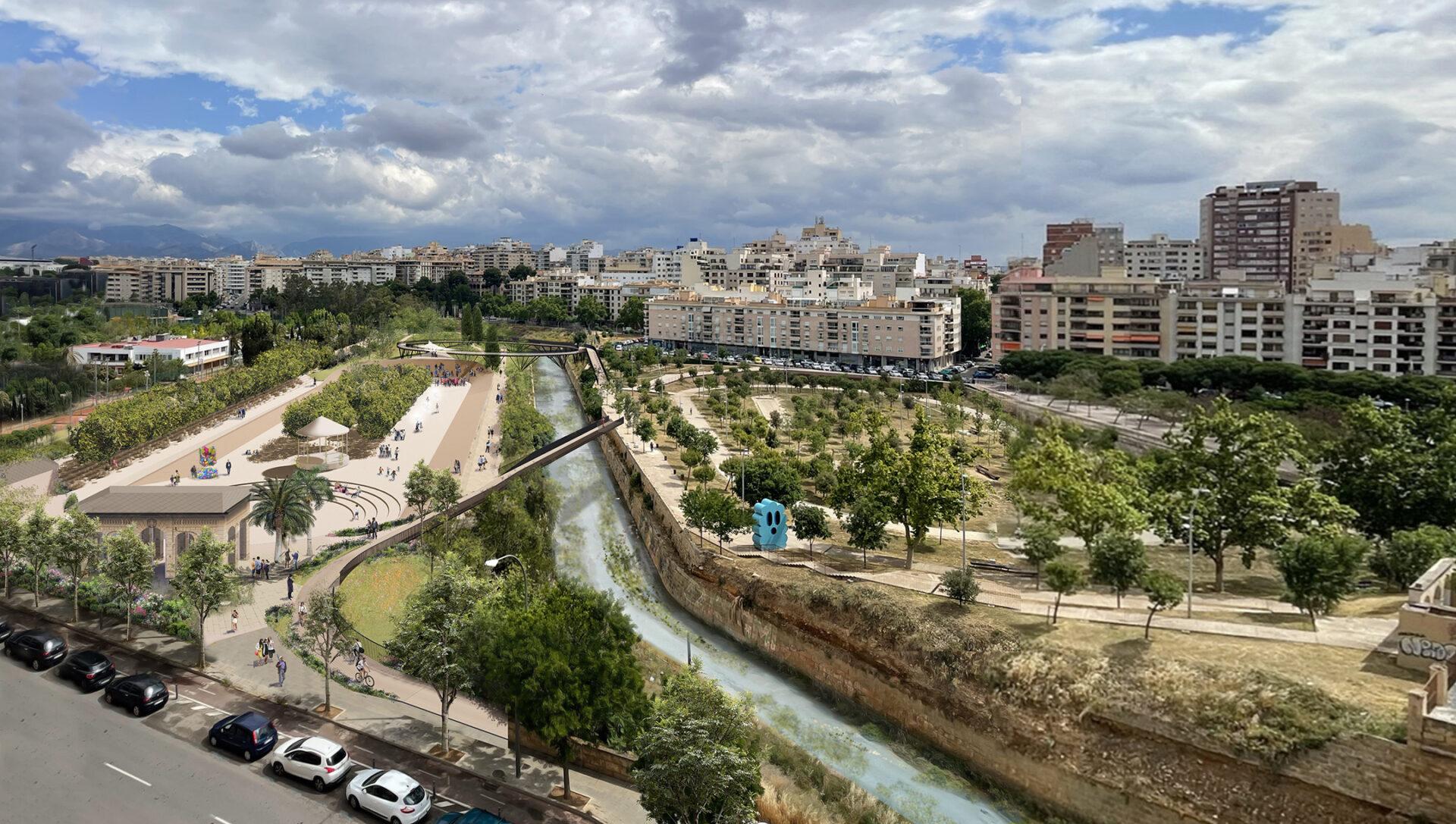
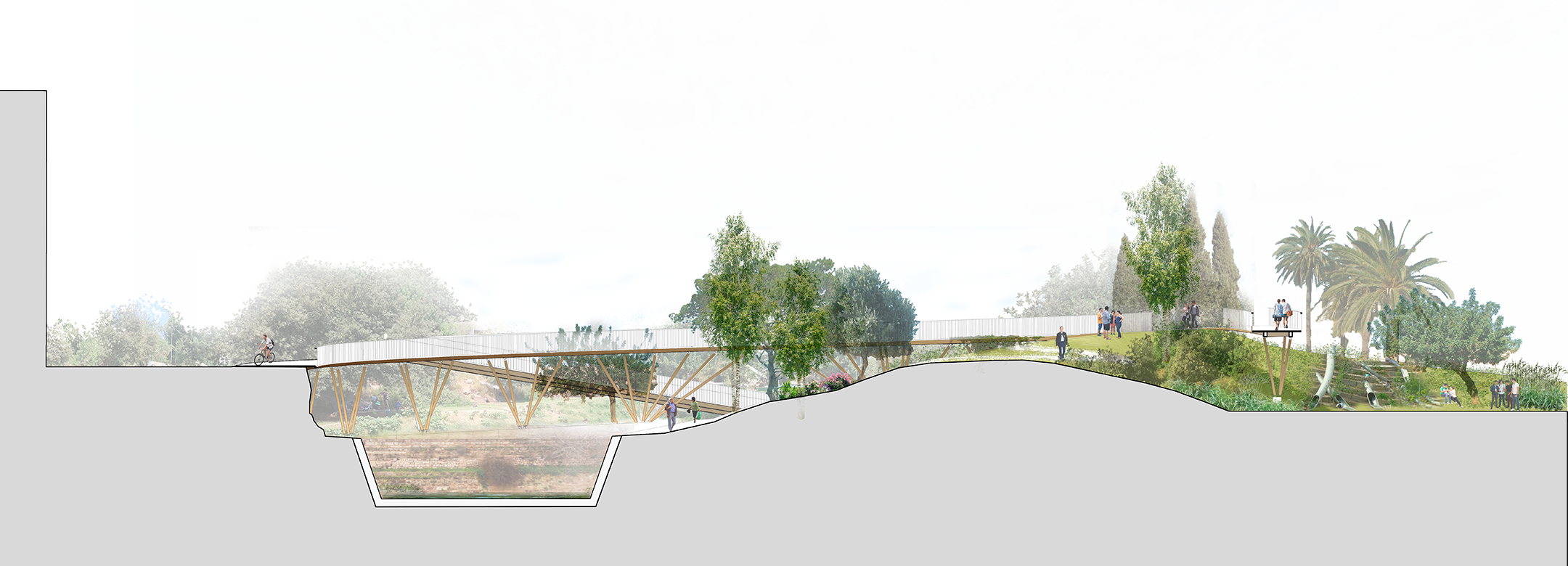
From a territorial perspective, the park is conceived as a key link in Palma’s network of open spaces, promoting ecological and pedestrian connectivity between the bay and the mountains. The proposal enhances spatial continuity through the renaturalization of the stream’s banks, the introduction of new pedestrian and cycling bridges, and the integration of the park with the neighboring districts of El Fortí and Bons Aires.
The architectural dimension revolves around two distinctive elements: the restoration of the velodrome as a sculptural structure with strong symbolic value, and the reactivation of the old pavilion as a welcoming center and urban lookout. The velodrome, envisioned as a piece of land art, becomes a flexible space for multiple uses (markets, fairs, cultural events), while the pavilion regains its original form and is adapted to host social and cultural activities, all through respectful and reversible construction solutions.
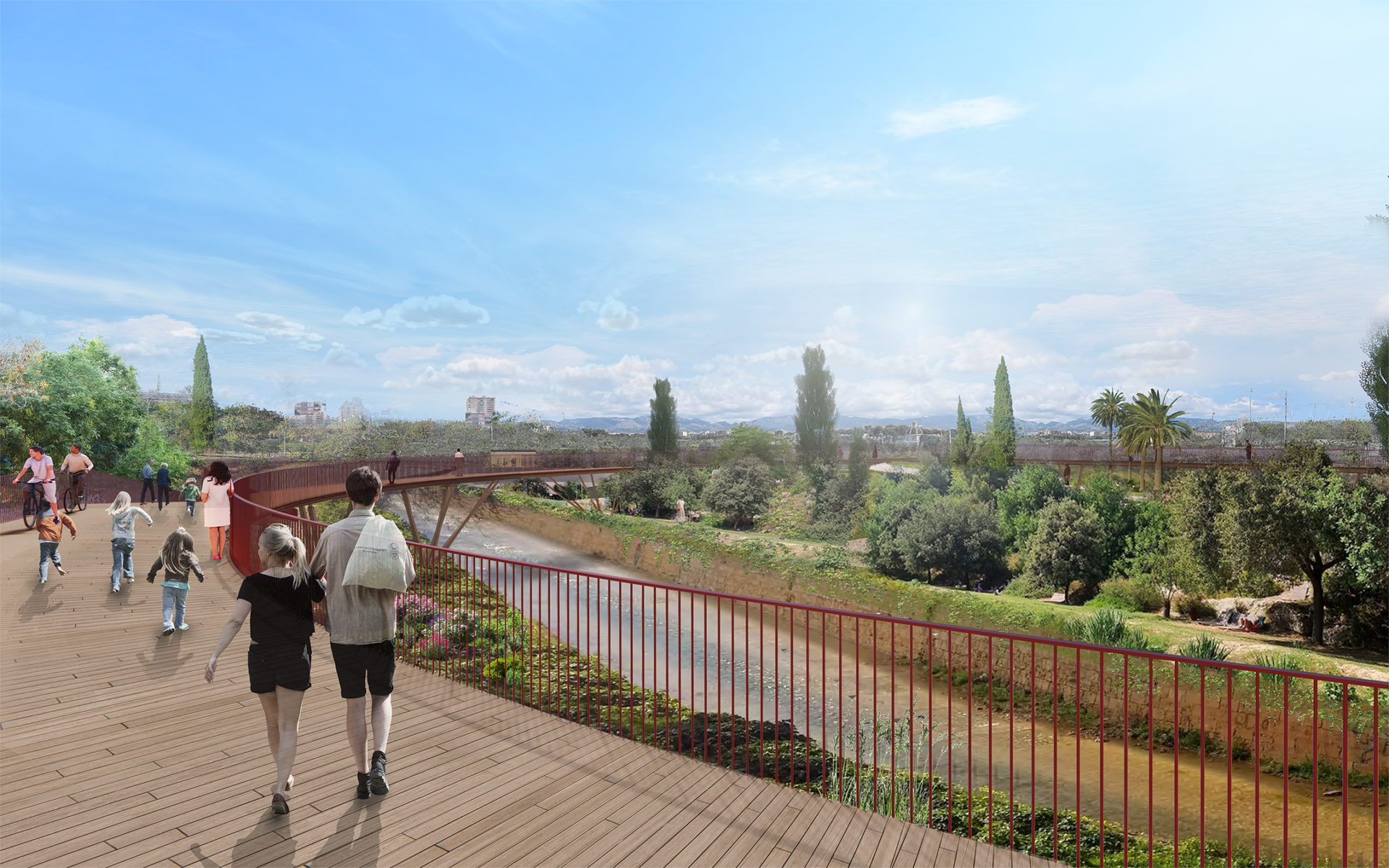
A wooden ring-walkway acts as a bridge, viewpoint, and playful path. This feature not only ensures universal accessibility but also creates a seamless connection between both sides of the stream, serving as a symbol of unity and a point of reflection on the urban and natural landscape. Functionally, the park offers a diverse network of uses: playgrounds, urban gardens, sports areas, meeting and relaxation spaces, shaping an intergenerational environment that fosters community life and public health.
From an environmental standpoint, the project embraces a comprehensive strategy for climate change adaptation and mitigation. Biodiversity is prioritized through the extensive use of native species, a cooler microclimate is created by increasing shaded and wooded areas, and soil permeability is maximized for sustainable water management. Three rainwater retention and filtration basins are created, the carbon footprint is significantly reduced through material reuse and the use of locally sourced wood, and a closed-loop water cycle is promoted even in ornamental features.
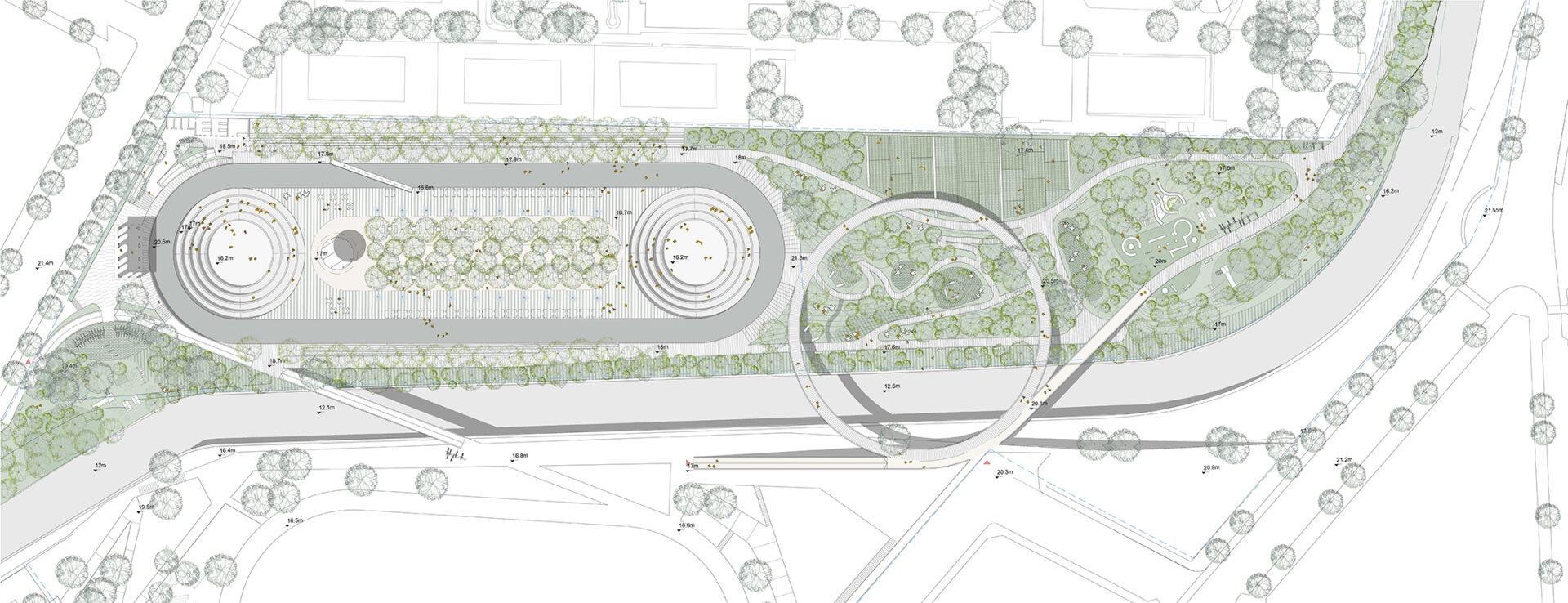
The landscape design is organic and sensory, emphasizing resilient vegetation, the restoration of natural dynamics along the riverbank, and a seasonal experience. Public participation is considered an essential pillar in defining the park’s uses and programming, reflecting the project’s commitment to open, inclusive, and socially sensitive planning.
Ultimately, “Tira-Tira pel Tirador” is a proposal that weaves together landscape, memory, sustainability, and participation to reconnect the city of Palma with its natural environment, its history, and its people—through a new public space that is contemporary, resilient, and deeply Mediterranean.
KEY INFO
ARCHITECTS
Belén Moneo, Jeffrey Brock
ARCHITECTURE TEAM
Francisco Blázquez, Ana Rodríguez,
Javier del Pozo, Yaiza Camacho
PLANS AND DRAWINGS